What a paid plan actually looks like
Screenshots of the real dashboard, not mockups. The account shown is fictional; the interface, the states and the failures are exactly what you would see.
The honest summary: paid plans do not submit to more engines or submit faster. Nothing can, because submission is one free public request. What they buy is everything that happens while you are not looking: the sitemap watched, the record kept, and someone telling you when a key file breaks.
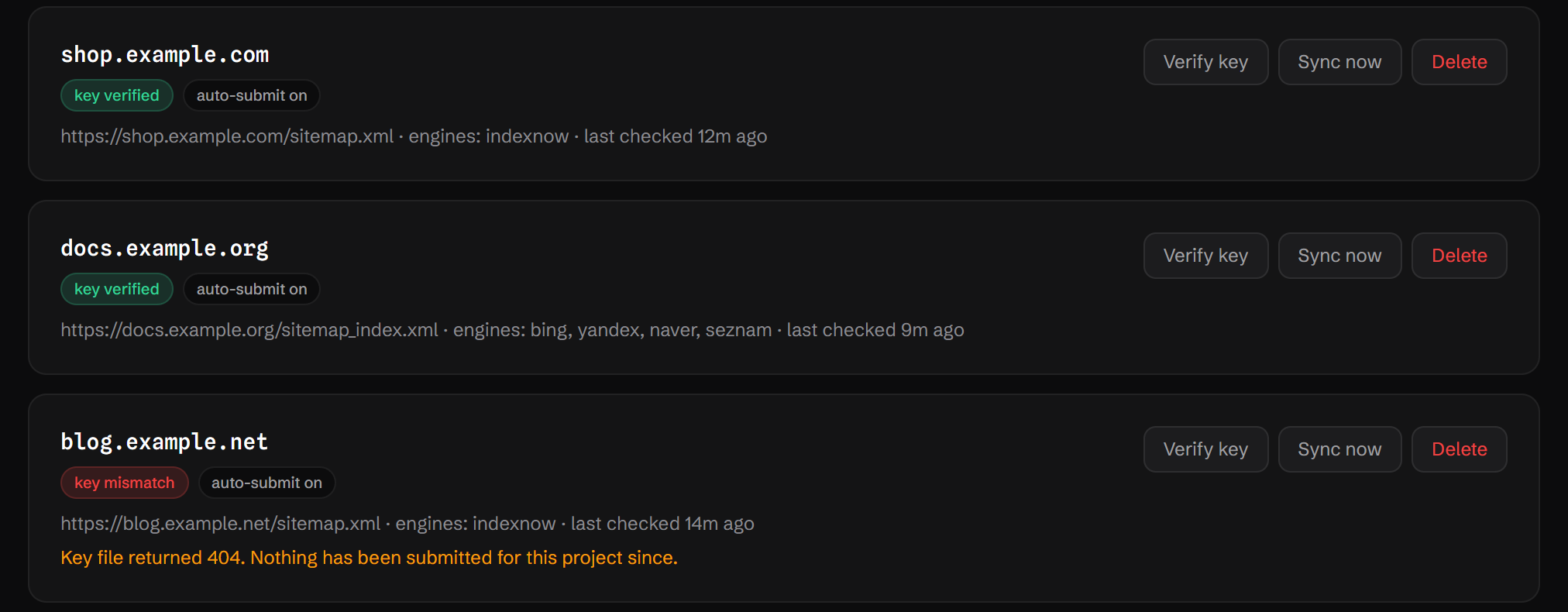
Your sites, watched without you
Pro and upEach project is one host, its IndexNow key and its sitemap. Once auto-submit is on, the sitemap is re-read on a schedule and anything new or changed is submitted for you. The third project here is the reason this exists. Its key file started returning 404, so submissions stopped, and rather than continuing to report success, the dashboard says which project is broken, why, and that nothing has gone out since. The free tool also checks the key when you submit manually; a paid watcher repeats that check while you are away.
A record of what was actually sent
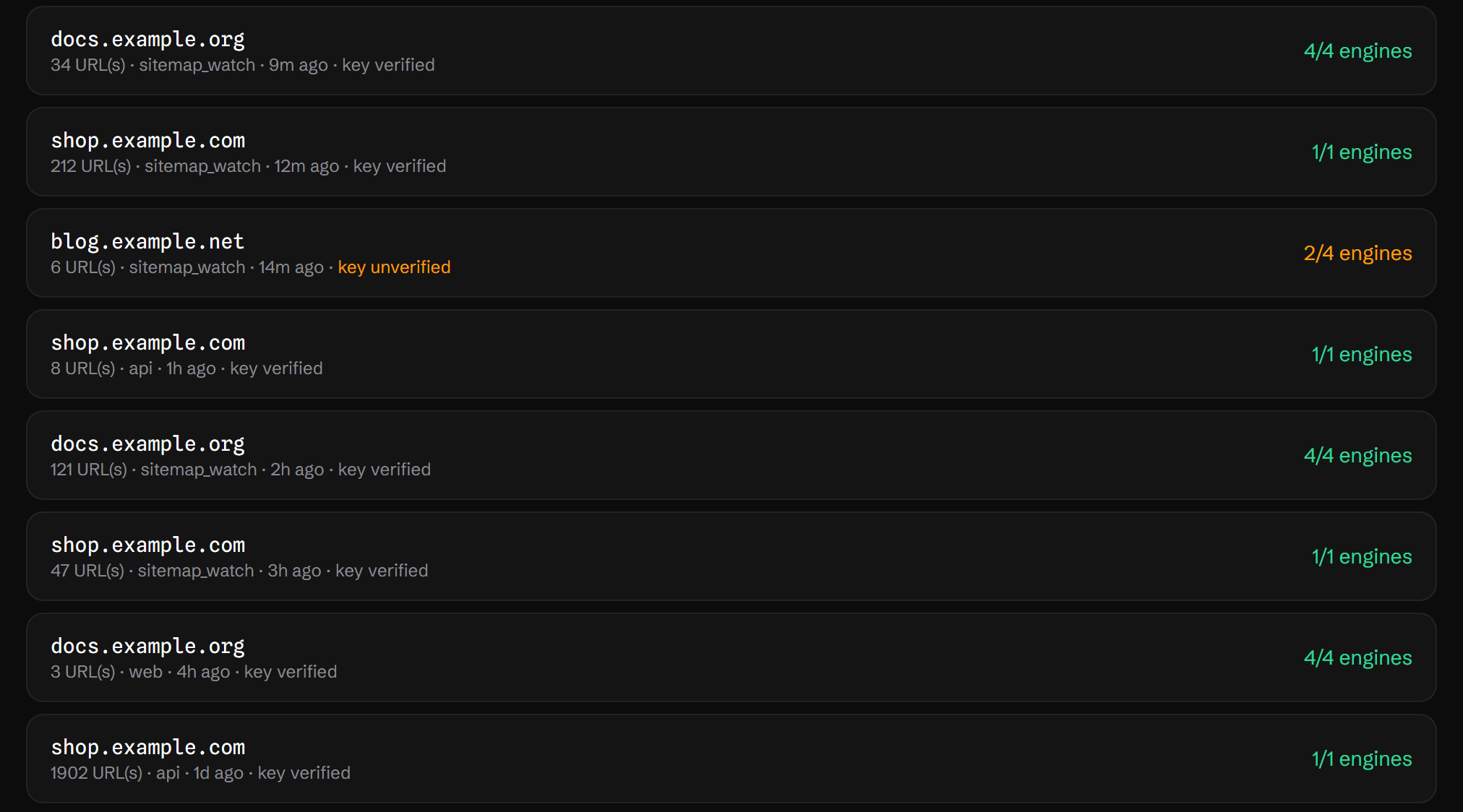
Pro and upEvery submission, with the URL count, where it came from (sitemap watch, the API, or
the web form), whether the key was verified at the time, and how many engines accepted it.
Note the third row: 2/4 engines and
key unverified. Bing and Yandex returned
202 for the same broken key that Naver and
Seznam rejected with 403: the split this
whole product is built around, visible in your own history. Kept 90 days on Pro and 365 on
Agency, exportable as CSV.
Where you stand, at a glance
Pro and upDaily URL usage against your allowance, projects against your plan limit, and how long history is kept. The check interval is shown because it differs by plan: hourly on Pro, every 15 minutes on Agency.

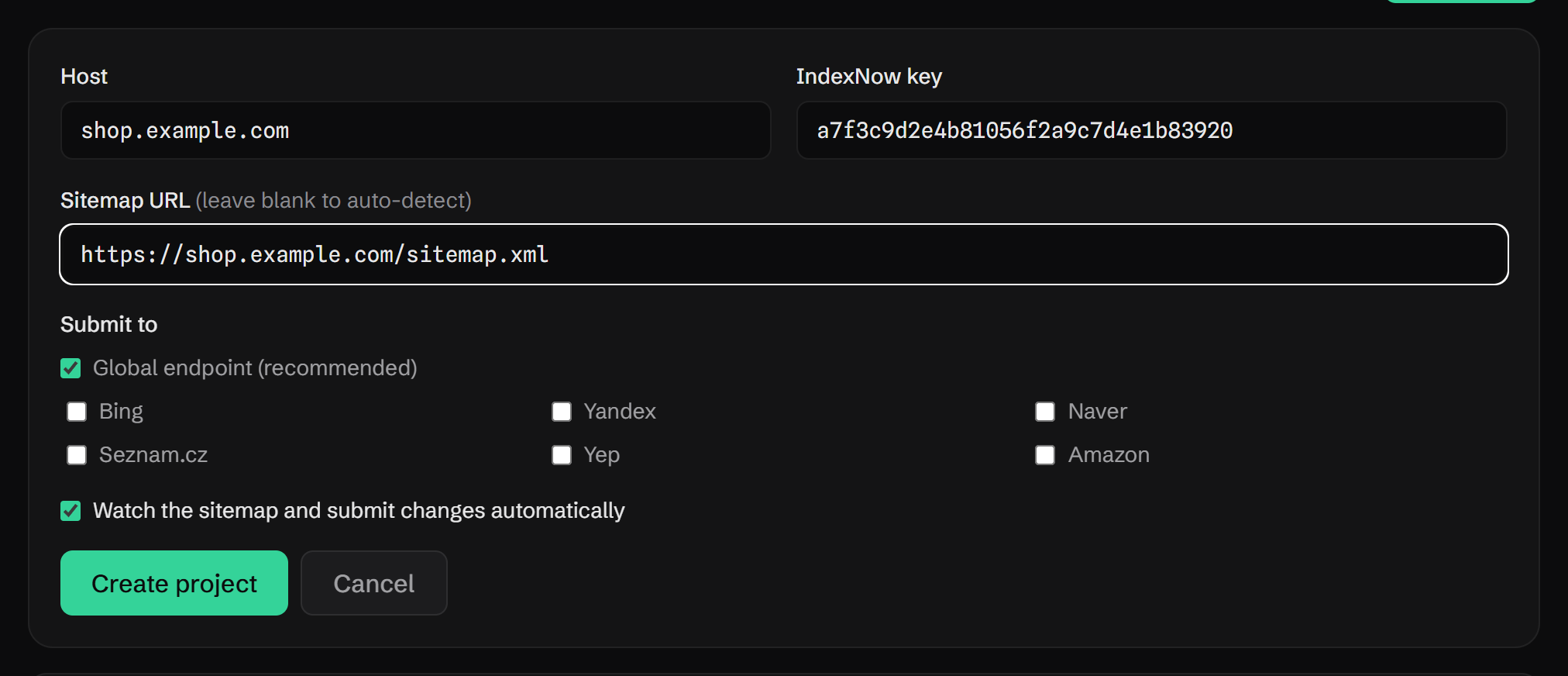
Setting one up takes a minute
Pro and upHost, key, sitemap. Leave the sitemap blank and it is discovered the way a crawler would
: robots.txt Sitemap: lines first, then the
conventional paths. Choose the global endpoint, which forwards to every participant, or pick
engines individually. The key file is fetched and verified before the project accepts anything.
Keys you can tell apart
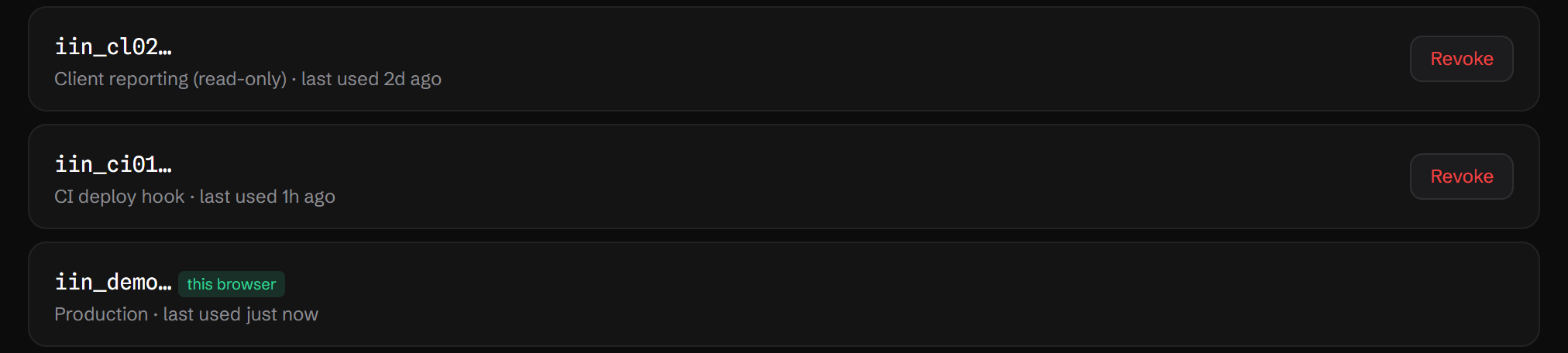
Agency and upName a key per use (one for CI, one for a client report, one for your own scripts) and see when each was last used. Revoke one without disturbing the others. Pro includes API access with a key; Agency is where multiple keys and per-key attribution matter, because that is when you are running this across a portfolio rather than a site.
Read-only Google Search Console
Pro and upConnect Search Console with read-only consent and check whether Google has actually indexed a URL, from the same dashboard. This is the one part of the product IndexNow cannot help with, since Google does not participate in the protocol, so it reads Google's own answer instead of guessing.
No screenshot for this one. Showing it would mean connecting a real Google account and displaying real property data, and inventing a picture instead is exactly the kind of claim this product exists to argue against. You will see it after you connect your own.
The two plans
Pro
Point it at your sitemap and stop thinking about indexing.
- •Everything in Free
- •View every broken URL in saved sitemap scan results
- •Automatic sitemap watching — new and changed URLs submitted hourly
- •Authenticated REST API with your own keys
- •3 projects
- •10,000 URLs/day
- •90 days of delivery history, exportable as CSV
- •Email alerts when a key file, sitemap or engine breaks
- •Read-only Google Search Console URL inspection
Agency
For people who do this across a portfolio of sites.
- •Everything in Pro
- •25 projects
- •100,000 URLs/day
- •Sitemaps checked every 15 minutes
- •Multiple API keys with per-key attribution
- •365 days of history and client-ready delivery reports
- •Google Search Console monitoring across your properties
- •Webhook-ready alerts
- •Priority support